

Lottery Defeated 2026: AI Accuracy Claims Examined, Pricing Verified, and What Consumers Should Confirm Before Buying
An informational consumer overview of Lottery Defeated software in 2026, analyzing the platform's AI prediction claims, Smart Pick algorithm language, pricing structure, refund policy, and what prospective buyers should research before purchasing
New York, NY, Feb. 27, 2026 (GLOBE NEWSWIRE) -- Disclaimer: This article is for informational purposes only and does not constitute financial, investment, gambling, or legal advice. This article contains affiliate links; if a purchase is made through links in this article, a commission may be earned at no additional cost to the buyer. Product details referenced are based on publicly available seller materials at the time of writing and should be verified directly with the official source before any purchase decision.
No lottery prediction system can guarantee wins. Lottery participation involves financial risk, and consumers should never spend more than they can afford to lose.
If you've been researching Lottery Defeated in 2026, you're likely trying to understand what the seller claims, what can be verified independently, and what questions are worth asking before paying for any lottery-related software.
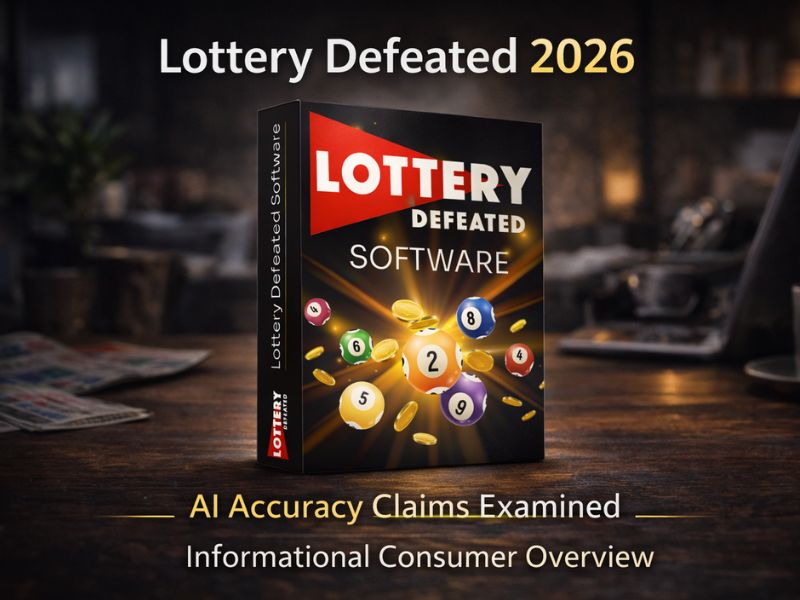
Consumer interest in lottery prediction software has continued to grow this year, driven in part by increased visibility through digital advertising and recurring high-jackpot headlines across Powerball, Mega Millions, and state-level drawings. Among the products generating search volume in the AI lottery prediction category is Lottery Defeated, a digital platform priced at $197 that markets itself as a data-driven number selection tool.
What follows is a detailed look at what the product offers, how the seller's marketing language should be interpreted, what the purchase actually includes, how pricing and refund terms work, and — perhaps most importantly — what you should independently verify before spending any money. Current product details, pricing, and terms can be confirmed by viewing the current Lottery Defeated offer (official Lottery Defeated page).
Before diving in, one thing worth stating clearly: no prediction system can change the underlying odds of a lottery drawing. Any expenditure on lottery-related products should be considered an entertainment expense with no guaranteed return.
What Lottery Defeated Is
Lottery Defeated is a web-based digital product that provides users with number combinations for popular lottery games, including Powerball, Mega Millions, and various state lotteries. The platform is marketed under the name Kenneth Leffer, which the product's own terms and conditions page discloses is a pen name used for publishing purposes.
The product is positioned as a lottery strategy software that uses historical draw data and algorithmic processing to generate number selections. It's delivered digitally and accessible via web browser on desktop, tablet, and mobile devices after purchase.
Here's what Lottery Defeated is not: it's not an investment product, it doesn't place bets or purchase tickets on your behalf, and it doesn't interact with any state or national lottery system. It's a consumer digital product — a tool that generates number suggestions based on historical data processing.
How the Seller Describes Its Technology
This section covers what the official product page says about how Lottery Defeated works. Everything described here reflects the seller's own characterizations, and independent third-party validation of these technical processes has not been identified as of this writing.
According to the seller's description, the system analyzes historical draw data using a large set of statistical variables — the materials reference 12,400 — and claims to filter out a high percentage of "losing or repeated combinations." The seller also references a historical dataset dating back to 1985, which the company calls "The Winning Treasure."
These technical and performance-related statements have not been independently audited as of publication.
The platform includes a feature called "Smart Pick" that the seller states generates number combinations by running historical data through a proprietary formula. Per the product page, this formula was derived from studying methods reportedly used by multiple repeat lottery winners.
Additional features described on the product page include hourly winning number updates, real-time draw integration across all 50 state lotteries, and a number matching tool that the seller states can cross-reference up to 10 combinations against recent drawing results. Supplementary planning and personal development resources are also listed as included bonus materials.
What the Purchase Includes
Per the official product page, a one-time purchase of Lottery Defeated provides access to the core software platform with the Smart Pick number generation tool and the Winning Treasure historical database. The purchase also includes hourly lottery result updates across major national and state games, a number matcher feature for cross-referencing played combinations, and the supplementary bonus materials mentioned above.
All access is described as lifetime with no recurring subscription fees. Per the official product page, future feature updates are included in the initial purchase price.
Lottery Defeated Pricing and Purchase Structure
The current listed price for Lottery Defeated is $197 as a one-time payment. The product page references previous higher pricing, though earlier price points cannot be independently confirmed.
The seller's page also uses scarcity language, including references to limited available copies and the website potentially being taken down. Consumers should treat this as a standard marketing technique. Avoid making purchase decisions based on countdowns, limited-copy claims, or urgency language, and verify current terms directly through the payment processor and official page.
Payments are processed through ClickBank, a third-party digital marketplace and payment processor. ClickBank's role as the payment processor does not constitute an endorsement of the product or any claims made in its promotion.
Consumers can confirm current pricing and availability by viewing the current Lottery Defeated offer (official Lottery Defeated page), as pricing may change at any time.
Lottery Defeated Refund Policy and 60-Day Guarantee
The seller advertises a 60-day money-back guarantee. The seller's publicly posted refund language states that requests may be submitted within 60 days of purchase. Per the published policy, refund requests are processed after receipt and funds may take several business days to appear back in the buyer's account, depending on the payment method and processor timelines.
Refunds are managed through ClickBank's support portal, not directly through the product seller. If you're considering a purchase, it's worth reviewing ClickBank's refund process independently so you understand any conditions or requirements that may apply before you commit.
Lottery Defeated and Winning Outcomes Context
The seller's page includes user-submitted stories and screenshots describing specific winnings. The page also includes a disclaimer stating these submissions are not intended to represent or guarantee typical outcomes. Because these accounts are self-reported and not independently verified, they should be treated as anecdotal marketing material rather than evidence of typical performance.
The seller's promotional materials also reference recurring winnings and income-style outcomes. These figures are not independently verified, and consumers should treat them as marketing examples rather than typical or expected results.
Here's why this matters: no lottery number-selection software, regardless of its data analysis capabilities, can establish a causal relationship between its output and specific lottery outcomes. Lottery drawings are designed as independent random events under established probability principles, meaning prior results do not influence future outcomes.
Lottery Defeated Accuracy Claims in 2026: What's Stated vs. What Can Be Verified
This is probably the most important section if you're trying to decide whether Lottery Defeated is worth your money.
Consumer searches for "Lottery Defeated accuracy," "Lottery Defeated win percentage," and "AI lottery prediction software" typically reflect an attempt to determine whether any performance claims are independently verifiable. That's a smart instinct, and the answer requires some context.
According to the seller's materials, the platform is described using terms like "accuracy," "statistical edge," and "pattern recognition," but those phrases are presented as marketing characterizations rather than audited performance metrics. The product page recounts a specific instance where the formula allegedly predicted all numbers in a Fantasy 5 drawing. These are claims made by the seller, not independently verified outcomes.
Independent verification would normally require transparent methodology, a publicly auditable tracking log, and third-party review showing results beyond chance over a statistically meaningful sample. As of this writing, the seller's materials have not been accompanied by this type of independent validation.
The mathematical reality of lottery games provides important context here. Every major lottery drawing in the United States uses equipment and procedures designed to ensure that each number selection is random and independent. In a pick-6 format, the odds of matching all numbers are approximately 1 in 13 million — the seller's own materials acknowledge this. These odds are a function of the game's mathematical structure and aren't altered by any external software or historical data analysis.
What the Lottery Defeated platform can do, based on its published descriptions, includes organizing historical draw data, displaying frequency charts and trend visualizations, generating number combinations based on algorithmic processing of past results, and cross-referencing played numbers against drawing outcomes.
What no lottery analytics software can do includes changing the underlying probability of any given combination being drawn, establishing a mathematically valid predictive relationship between past random drawings and future ones, or guaranteeing any specific financial return. Each lottery drawing operates as an independent random event, and the outcome of one drawing has no statistical bearing on the next.
Consumers researching terms such as "Lottery Defeated accuracy rate," "Lottery Defeated statistical edge," or "Lottery Defeated AI prediction" should understand that these metrics, when referenced in promotional materials, represent the seller's internal characterization rather than externally audited data.
This section focuses on how performance-related marketing language is typically interpreted when consumers are trying to determine what can be verified independently before purchasing.
Common Misconceptions About Lottery Prediction Systems
Before making a decision about any lottery-related product, it helps to understand a few well-documented concepts that affect how people evaluate these tools. None of this is specific to Lottery Defeated — it applies to the entire product category.
Gambler's fallacy is the belief that a number is "due" to appear because it hasn't been drawn recently. In reality, each drawing is independent. A number that hasn't shown up in 50 drawings has exactly the same probability of appearing next time as one that appeared last week. The lottery doesn't have a memory.
Pattern illusion refers to the well-documented human tendency to see meaningful sequences in data that is actually random. Our brains are wired to find patterns — it's what kept our ancestors alive. But when applied to lottery results, this instinct can lead to the mistaken belief that certain sequences are predictive rather than coincidental.
Random clustering describes the normal statistical phenomenon where certain numbers appear more frequently than expected over a given period. This is a natural property of random systems, not evidence of an exploitable trend. Over sufficiently large sample sizes, these clusters flatten toward expected probability distributions.
Survivorship bias occurs when positive outcomes are disproportionately visible while negative outcomes go unreported. In the context of lottery products, user testimonials highlighting wins represent a self-selected sample. The experiences of users who purchased the product and didn't win are far less likely to appear in marketing materials. This doesn't mean the testimonials are fabricated — it means they represent a non-random slice of all user outcomes.
These concepts apply broadly to all lottery prediction products, not specifically to Lottery Defeated. They're included here as general consumer education context.
How to Verify a Digital Lottery Product Before Buying
If you're seriously considering Lottery Defeated or any similar product, running through these verification steps can help you make a more informed decision.
Check whether the seller provides independently audited performance data rather than self-reported results. Confirm the identity and qualifications of the product creator — this is particularly important when a pen name is disclosed, as is the case here. Review the refund policy through the payment processor directly rather than relying solely on the seller's website. Search for the product on consumer review platforms and the Better Business Bureau to see what other buyers have experienced.
You can also evaluate whether the product's methodology has been reviewed or discussed by credible third-party statisticians or probability experts, and whether the marketing language makes mathematically verifiable claims about random events. The seller's page also uses scarcity language referencing limited copies — consumers should verify current availability independently rather than treating urgency framing as a time-sensitive constraint.
These steps are applicable to any digital lottery data tool and aren't specific to Lottery Defeated.
Digital Lottery Tools in 2026: Category Context
The market for digital lottery software in 2026 includes products ranging from free random number generators to subscription analytics dashboards to one-time-purchase prediction platforms like Lottery Defeated.
Products in this space generally fall into a few tiers: free random number generators with no data analysis, low-cost subscription tools offering basic historical data visualization, and premium one-time-purchase platforms that combine historical databases with proprietary algorithms. Lottery Defeated positions itself in the premium tier based on its one-time pricing, claimed database depth, and feature set.
When evaluating any product in this category, the key question is whether the price is justified by verifiable utility beyond what free or low-cost alternatives provide. Publicly available information does not show that lottery software tools can overcome the probability constraints inherent in randomized drawings. Some buyers look for tools that help organize historical results and manage number selections, which is distinct from demonstrating predictive performance.
Who Might Consider a Lottery System in 2026
If you already play the lottery and treat it as entertainment rather than an income strategy, some buyers look for tools that help track past results and organize number selections, though those use cases are distinct from claims about predicting outcomes. The key distinction is between organizational utility and predictive capability.
Lottery Defeated may appeal to individuals who currently play and want a more structured approach to number selection, are interested in viewing historical draw data in an organized format, prefer a one-time purchase over subscription alternatives, and understand clearly that no software can guarantee lottery wins.
It's worth being direct about who this probably isn't for. If you're looking at lottery play as a reliable income source, this product won't change that math. If you interpret marketing language about earnings-style outcomes as a promise, you're likely to be disappointed. And if you can't comfortably afford to lose $197 plus the cost of lottery tickets without financial impact, this purchase doesn't make sense.
Responsible gambling practices apply to all lottery participation. Only money you can afford to lose should go toward lottery play, and any product positioned as a path to financial outcomes through lottery games should be evaluated as an entertainment expense, not an investment. If you or someone you know may have a gambling problem, the National Council on Problem Gambling provides free, confidential support at 1-800-522-4700 or ncpgambling.org.
Consumer Questions
What is Lottery Defeated?
It's a digital platform that generates lottery number combinations using historical draw data and algorithmic processing. It's marketed as a strategy tool for lottery players and sold as a one-time purchase through ClickBank.
Who created Lottery Defeated?
The product is published under the name Kenneth Leffer. The product's own terms page discloses that this is a pen name used for publishing purposes.
Does Lottery Defeated guarantee lottery wins?
No. No lottery software can guarantee wins. Lottery drawings produce random, independent outcomes, and no data analysis tool can alter the mathematical probability of any specific combination being drawn.
What does the Smart Pick feature do?
Per the seller's product page, Smart Pick generates number combinations by analyzing historical draw data against proprietary statistical variables. The seller claims this process filters out a significant percentage of historically losing combinations.
How much does Lottery Defeated cost?
The listed price at time of writing is $197 as a one-time payment, subject to change. Confirm current pricing on the official product page.
Is there a refund policy?
The seller advertises a 60-day money-back guarantee processed through ClickBank. Review ClickBank's refund process independently before purchasing so you know exactly what to expect.
What is the gambler's fallacy, and why does it matter here?
It's the mistaken belief that past outcomes influence future results in independent random events. In lottery drawings, each event is independent regardless of what numbers have or haven't appeared recently. Understanding this helps you evaluate whether claims about pattern-based prediction are mathematically sound.
Can the accuracy claims on the product page be independently verified?
As of this writing, no independent third-party audit or peer-reviewed analysis of the platform's predictive accuracy has been identified. The accuracy language in the seller's materials represents internal characterizations rather than externally validated metrics.
Is Lottery Defeated available for all lottery games?
Per publicly available product information, the platform is compatible with Powerball, Mega Millions, and all 50 state lotteries. Verify specific game compatibility on the official product page before purchasing.
Are the user stories on the product page verified?
The product's own disclaimer states that forwarded results are not intended to represent or guarantee typical outcomes. These accounts should be understood in the context of survivorship bias — positive experiences are more likely to be shared than negative ones.
What does "pen name used for publishing purposes" mean?
This disclosure, found on the official product page, indicates that Kenneth Leffer may not be the real name of the product creator. This is relevant if you're trying to verify the creator's stated qualifications or background.
How does Lottery Defeated compare to free number generators?
Free generators produce random combinations without data analysis. Lottery Defeated differentiates itself by incorporating historical data and algorithmic filtering. Whether the features described by the seller are worth the price depends on the buyer's expectations, risk tolerance, and understanding of probability-based games.
Is playing the lottery a sound financial strategy?
Most financial advisors consider lottery play a form of entertainment, not an investment strategy. Most lottery players lose money over time regardless of the system used. Lottery participation should be budgeted as a discretionary entertainment expense.
Where can consumers report concerns about lottery-related products?
The Federal Trade Commission at ftc.gov, your state attorney general's office, or the Better Business Bureau. For payment-related concerns, ClickBank's customer support portal is available.
Additional Consumer Research
Additional independent research across multiple consumer publications may provide broader perspective on this product category. Evaluating multiple sources is recommended before making any purchasing decision.
Consumers interested in an earlier informational overview of this product may also find relevant context in a previously published consumer overview of Lottery Defeated and LottoCash AI, which covers additional feature details and platform background.
Complete product details, current pricing, and published terms are available by viewing the current Lottery Defeated offer (official Lottery Defeated page).
Summary of Key Considerations
Lottery Defeated is a $197 digital platform that generates number combinations for lottery games using historical data analysis and algorithmic processing. The product is sold through ClickBank with a published 60-day refund policy. The creator publishes under a disclosed pen name.
Promotional language on the official product page references accuracy, statistical edge, and pattern recognition capabilities. These represent the seller's internal characterizations and have not been accompanied by independent third-party validation as of this writing.
All lottery drawings are designed to produce random, independent outcomes. Publicly available information does not show that lottery software tools can overcome the probability constraints that govern randomized drawing events. Consumers should evaluate this product as a data organization and number selection tool, not as a system capable of guaranteeing financial returns.
If you're considering a purchase, take the time to verify all product claims, pricing, and refund terms independently. The verification steps outlined earlier in this article provide a practical framework for doing so.
Contact Information
Product Name: Lottery Defeated
Contact Email: contact@lotterydefeater.com
Product Website: lotterydefeated.com
Payment Processor: Click Sales Inc., 1444 S. Entertainment Ave., Suite 410, Boise, ID 83709
Disclaimers
Content and Consumer Information Disclaimer: The information presented in this article is for general informational and consumer education purposes only and does not constitute financial, investment, gambling, or legal advice. All product descriptions, feature details, and performance characterizations are derived from the seller's publicly available materials at the time of writing and have not been independently audited or verified unless specifically noted. Readers are encouraged to verify all details directly with the product vendor before making any purchasing decision.
Financial Risk and Gambling Awareness Notice: Lottery participation involves financial risk. Most lottery players lose money over time regardless of the system used. No software, algorithm, or prediction tool can guarantee lottery wins or alter the mathematical odds of randomized drawing events. Consumers should only spend money on lottery-related products and lottery tickets that they can afford to lose. If you or someone you know may have a gambling problem, the National Council on Problem Gambling provides free, confidential support at 1-800-522-4700 or ncpgambling.org.
Results, Pricing, and Product Variability: Individual results from using any lottery-related product will vary. Product pricing, features, bonus materials, and refund terms may change without notice. All current details should be verified through the payment processor and the official product page before purchase.
FTC Affiliate Disclosure and Publisher Responsibility: This article may contain affiliate links. If a purchase is made through these links, a commission may be earned at no additional cost to the buyer. These commissions support independent content creation and do not influence the editorial analysis presented herein. Click Sales Inc. (ClickBank) is the payment processor for this product. ClickBank's role as payment processor does not constitute an endorsement of the product or any claims made in its promotion. The publisher of this content disclaims any liability for outcomes resulting from the use of information provided herein.

Contact Email: contact@lotterydefeater.com

Legal Disclaimer:
EIN Presswire provides this news content "as is" without warranty of any kind. We do not accept any responsibility or liability for the accuracy, content, images, videos, licenses, completeness, legality, or reliability of the information contained in this article. If you have any complaints or copyright issues related to this article, kindly contact the author above.
